Old Fethiye Walk: Paspatur, Harbour, Tombs and Theatre
A self-guided walk through old Fethiye, linking the harbour, Paspatur bazaar quarter, the ancient theatre, Lycian sarcophagi and the Tomb of Amyntas in a relaxed half day.
Old Fethiye is small enough to cover on foot in a relaxed half day, and it packs in more history than most first-time visitors expect. The modern town was rebuilt after a severe earthquake in 1957, but the harbour, the old bazaar streets and a scattering of ancient stone tombs still tell the story of Telmessos, the Lycian and Roman city underneath. This route links the main sights in a loose loop, with room to stop wherever something catches your eye.
Why a self-guided walk works here
The sights sit close together: the harbour, the old bazaar quarter of Paspatur, the Roman-era theatre and a handful of Lycian tombs are all within a short stroll of each other. The terrain is mostly flat, with one climb at the end if you choose to visit the rock tomb above town. You do not need a guide, though a guide can add context if you enjoy a spoken history. Whatever you decide, check current details locally on the day, as opening arrangements for museums and sites can change.
Step 1: Start at the harbour
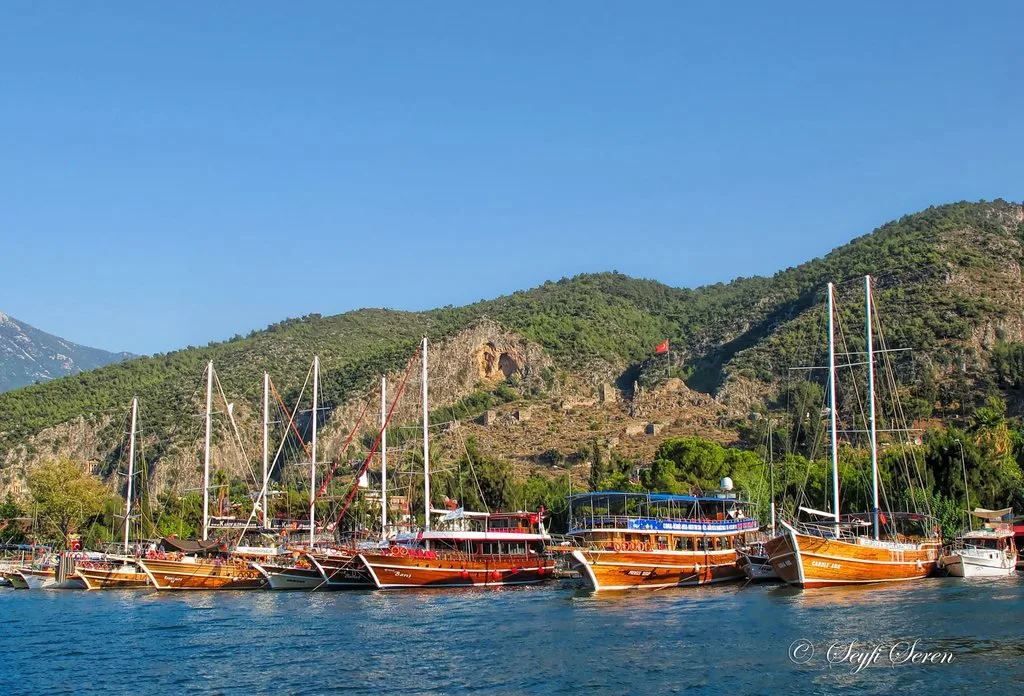
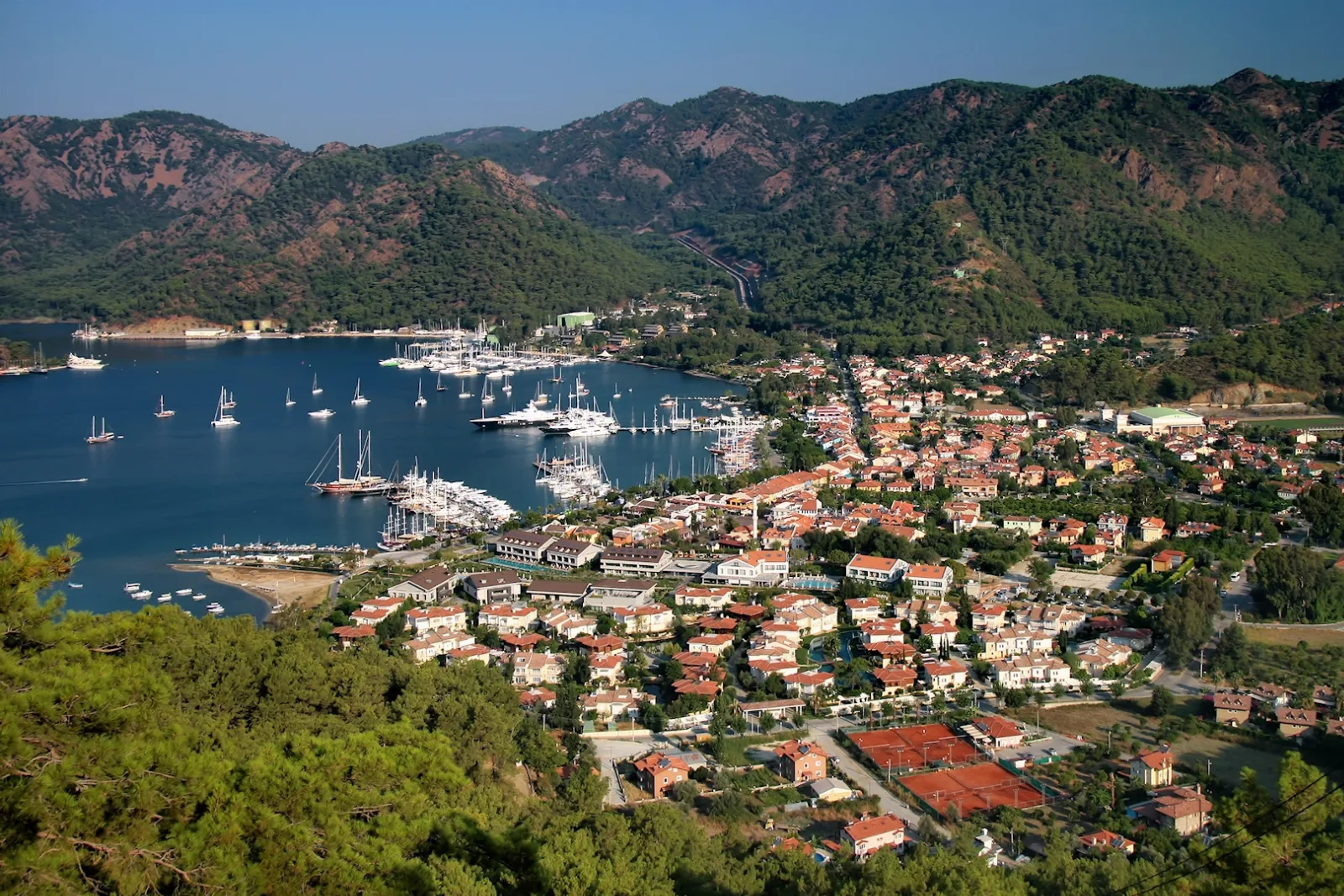
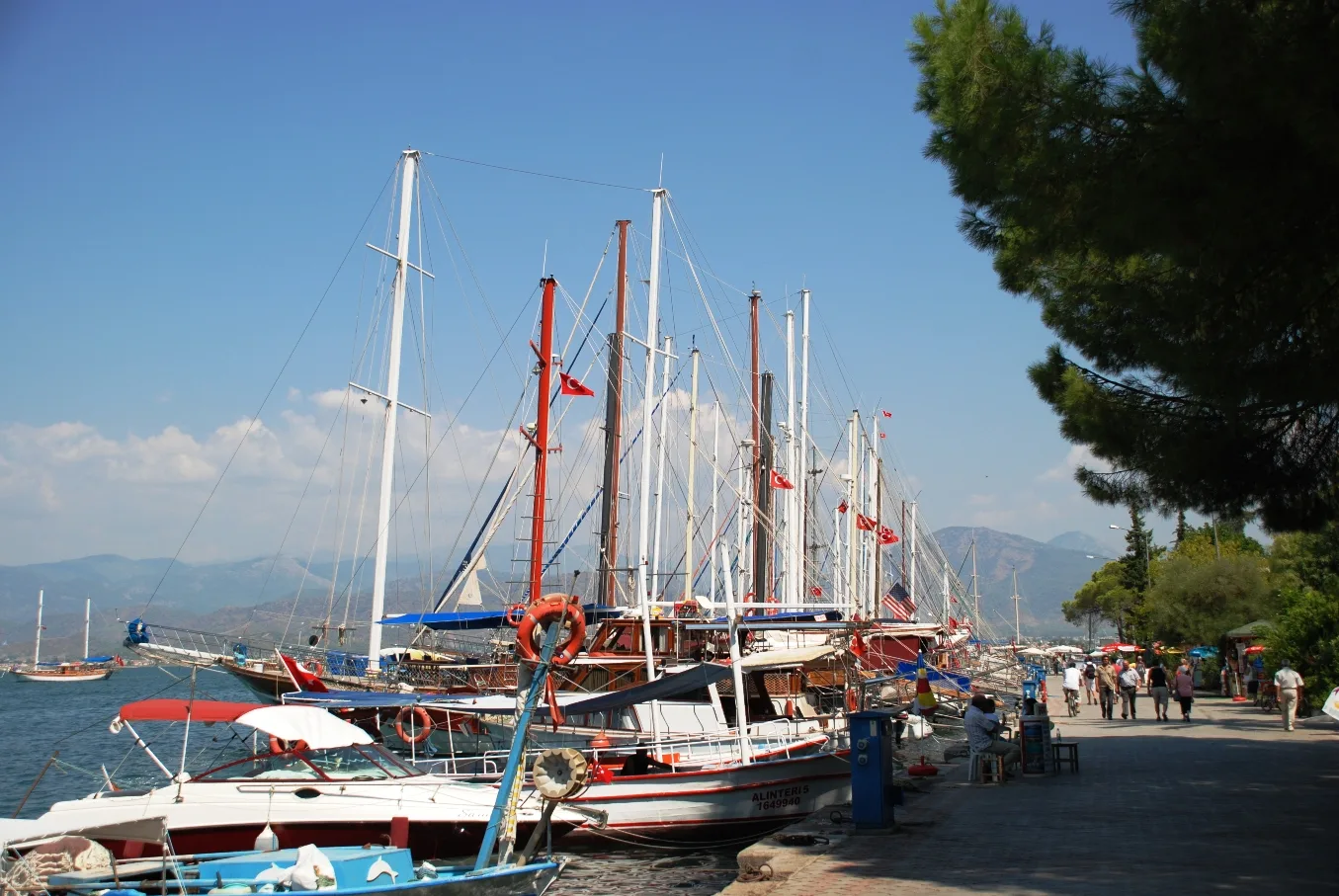
Begin on the waterfront promenade, where the gulf opens out and the islands sit on the horizon. This is the natural starting point because boats leave from here for the gulf and islands, so you get a sense of the town's working side before the historic part. Walk along the water for a while and take in the mountains behind the bay. If you are tempted by a boat trip, our 12 Islands boat tour guide explains what to expect.
In the morning the harbour is calm and pleasant for a stroll. There are separate walking and cycling paths along the waterfront, and you can watch the excursion boats and the fishing boats moored along the quay.
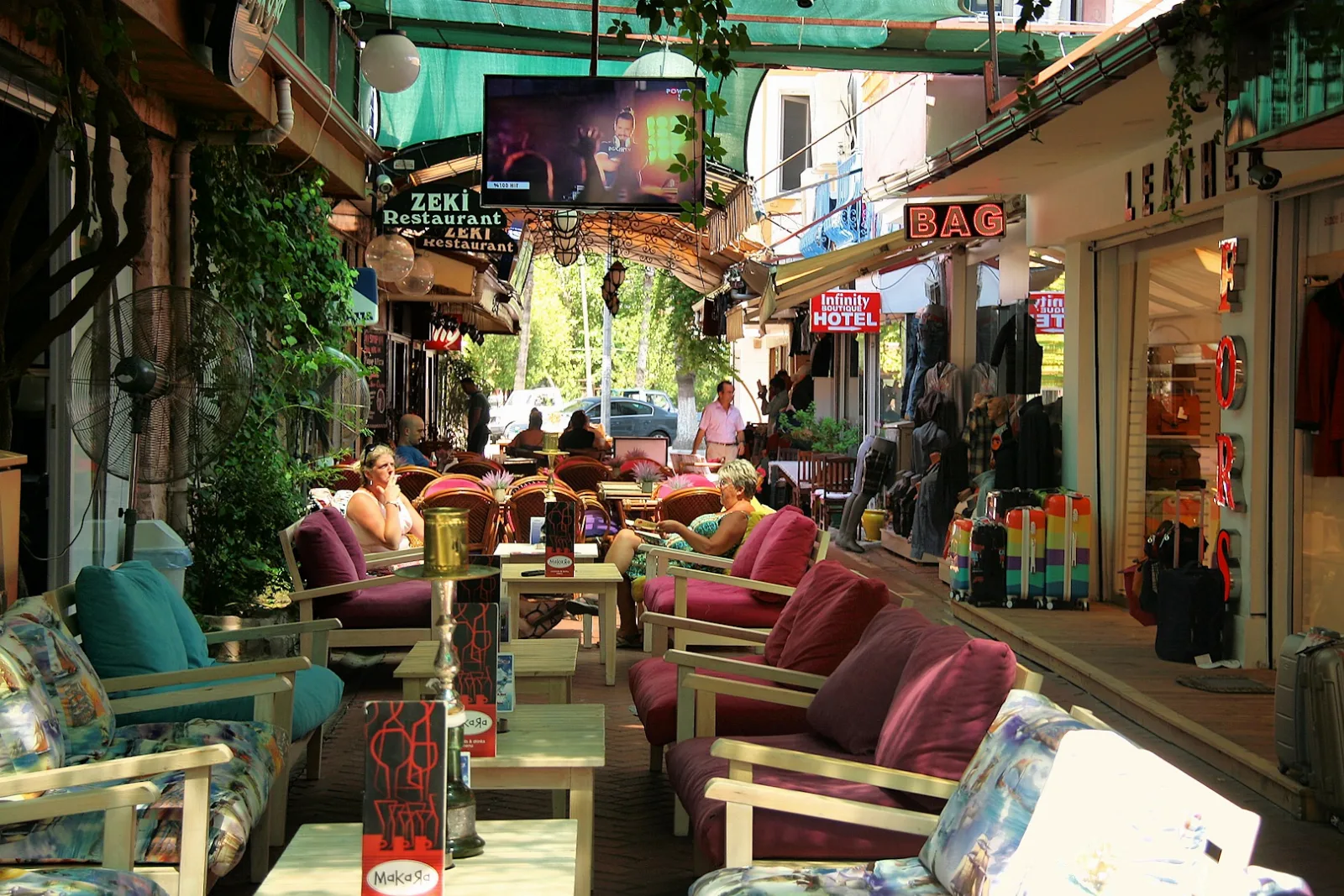
Step 2: Wander into Paspatur
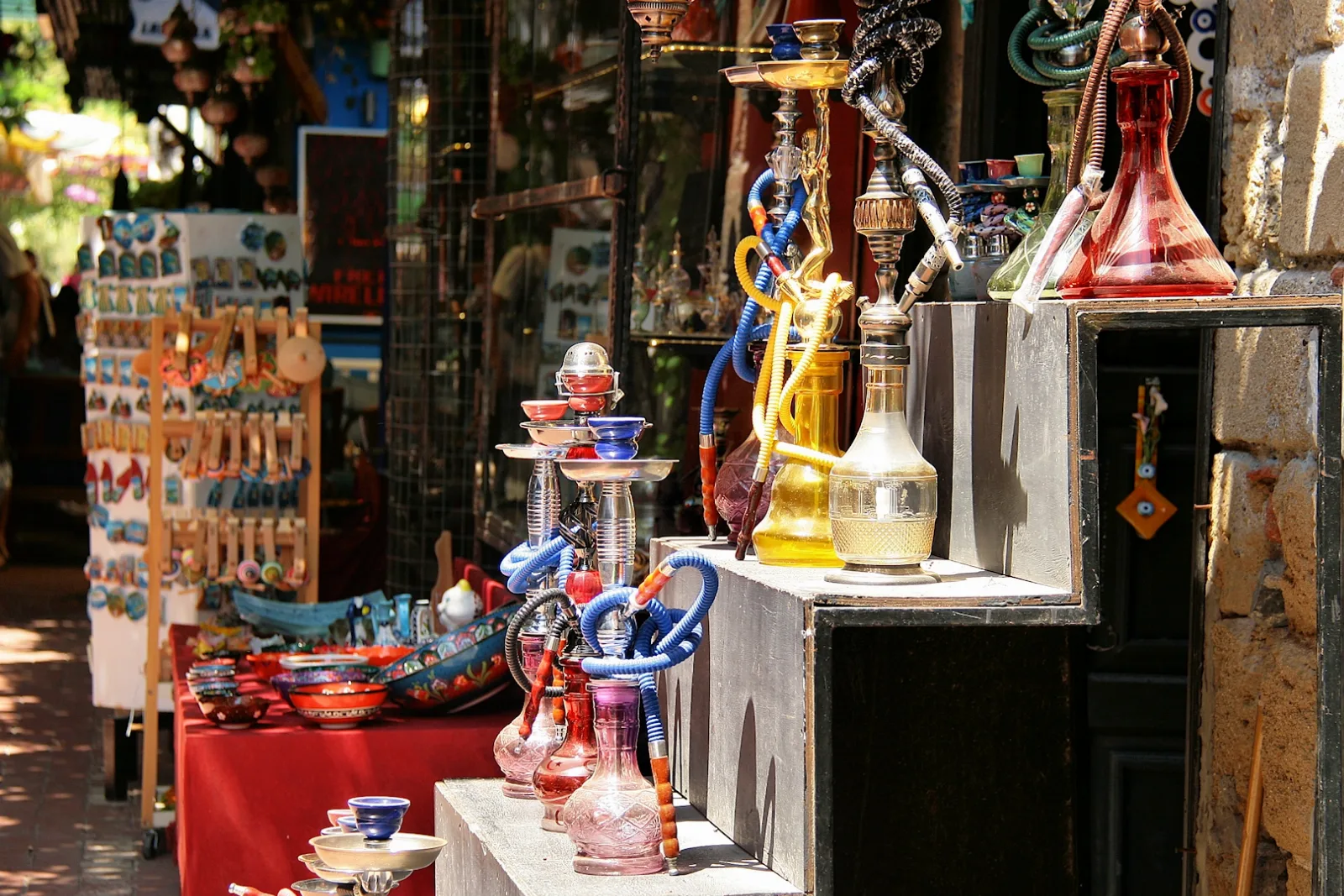
Just back from the harbour you will find Paspatur, the old bazaar quarter. Its lanes are narrow and lined with shops, cafés and restaurants, and it is one of the few areas where the older streetscape survived the 1957 earthquake better than much of the town. Layers of Lycian, Hellenistic, Roman, Byzantine and Ottoman history lie beneath this part of Fethiye. The mood is lively, so expect some sales patter. A polite "no, thank you" is accepted, and you can browse at your own pace.
Paspatur is also known for its fish market area, where the day's catch is sold and nearby restaurants will cook what you choose. For more on local dishes, see our guide to what to eat in Fethiye.
Step 3: Find the Roman-era theatre
At the edge of the old quarter stands the ancient theatre of Telmessos. It dates from the Roman period, probably the time of Emperor Augustus, and may stand on an earlier Hellenistic theatre. The theatre was buried for centuries, then excavated by the Fethiye Museum in the 1990s, and conservation work has continued since. Its seating bowl is wide enough to have held several thousand spectators, so treat any single date you see as approximate. The theatre was buried for centuries, then excavated by the Fethiye Museum in the 1990s, and conservation work has continued since. Its seating bowl is wide enough to have held several thousand spectators.
Whether you can walk inside or only view it from the edge depends on the current state of restoration, so check locally. Even from outside it gives a vivid sense of how large and organised the ancient city once was.
Step 4: Spot the Lycian sarcophagi
One of the most distinctive things about Fethiye is that Lycian stone tombs stand in the middle of modern streets. After the earthquake, the town was rebuilt around them. These sarcophagi, with their characteristic pointed, boat-shaped lids, are scattered through the town centre rather than gathered in one place. Look for them near the municipal buildings, along main roads and in small corners between apartment blocks. Several more are displayed in the garden around the Fethiye Museum.
The Lycians believed that tombs should be seen, and they built them prominently along roads and on hillsides. Fethiye still shows that tradition, even if the surroundings have changed.
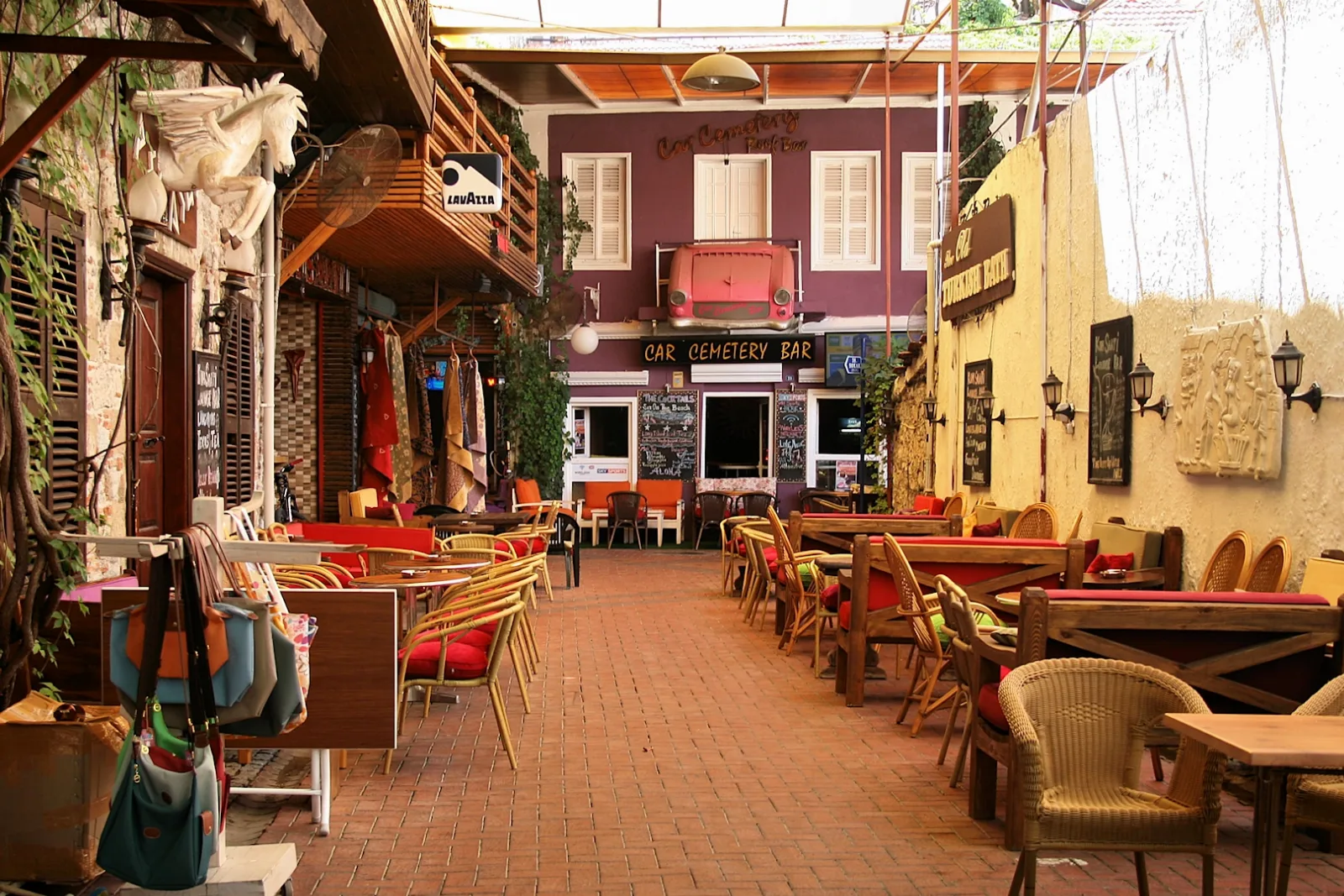
Step 5: Fethiye Museum
If you want context for everything you have just seen, the compact Fethiye Museum is worth a stop. It is best known for the Trilingual Stele, an inscription in Lycian, Greek and Aramaic found near the Letoon, and it also holds finds from Telmessos and the surrounding region. The garden has Lycian and Roman stonework. Opening days and entry arrangements can change, so check the current situation locally before you go.
Step 6: Climb to the Tomb of Amyntas
To finish, head to the cliff face above the town, where the Tomb of Amyntas is carved into the rock. It is the town's best-known monument, and the view back over the harbour and the bay makes the climb worthwhile. A full description, with route details, is in our Tomb of Amyntas guide.
Practical tips for the route
- Allow roughly three to four hours with stops, longer if you visit the museum and climb to the tomb.
- Wear comfortable shoes with grip; old paving and rock steps can be uneven.
- Bring water, sun protection and a light layer for cooler evenings in the shoulder seasons.
- Check museum and site access locally on the day, as arrangements change.
- Tuesday is market day in town, so the streets can be busier then. See our Tuesday market guide if you want to combine the two.
A simple route at a glance
| Stop | What to look for | Time to allow |
|---|---|---|
| Harbour promenade | Bay views, boats, islands on the horizon | 20-30 minutes |
| Paspatur | Narrow lanes, bazaar life, fish market area | 45-60 minutes |
| Ancient theatre | Seating bowl of Telmessos | 15-20 minutes |
| Lycian sarcophagi | Tombs standing in the streets | 20-30 minutes |
| Fethiye Museum | Trilingual Stele, garden stonework | 30-45 minutes |
| Tomb of Amyntas | Rock-cut tomb, view over the bay | 45-60 minutes |
Frequently asked questions
Is old Fethiye worth visiting?
Yes. It is compact and easy on foot, and it combines the harbour, a lively old bazaar quarter, a Roman-era theatre and Lycian tombs in one walk.
How long does the old Fethiye walk take?
Plan on roughly three to four hours with stops, or longer if you visit the museum and climb to the Tomb of Amyntas.
Where is the ancient theatre in Fethiye?
It stands at the edge of the old quarter near Paspatur, close to the harbour. Check locally whether you can enter or only view it from outside.
What is Paspatur in Fethiye?
Paspatur is the old bazaar quarter just behind the harbour, with narrow lanes, shops, restaurants and a fish market area.
Are the Lycian tombs in Fethiye free to see?
Many sarcophagi stand openly in the streets, but access to museum areas and some sites can vary, so check locally on the day.