The Tomb of Amyntas and the Lycian Rock Tombs of Fethiye
Carved into the cliff above the town, the Tomb of Amyntas is Fethiye's signature ancient monument. Here is how to visit and what the tombs mean.
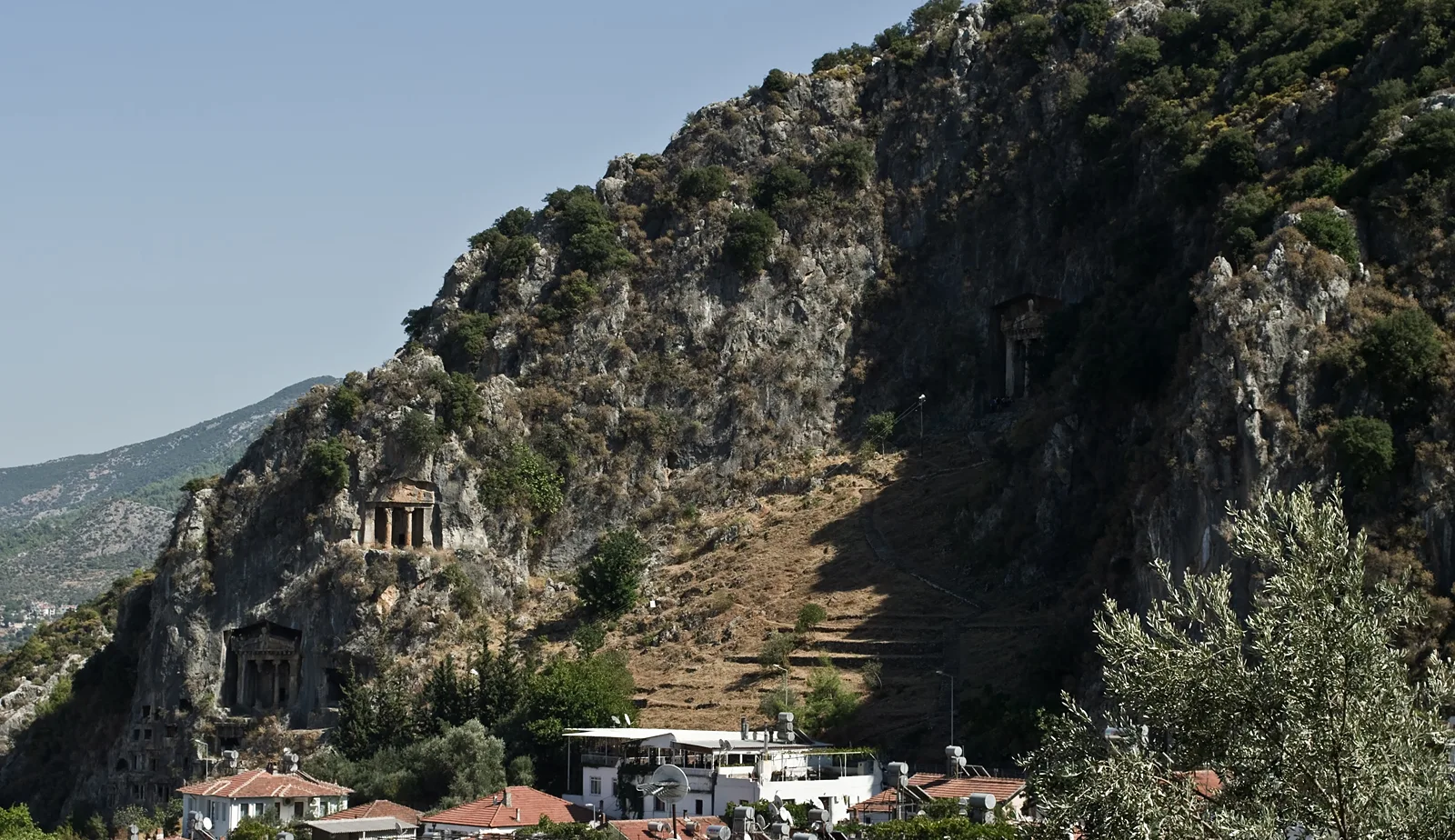
Look up from almost anywhere along Fethiye’s waterfront and you will see it: a temple facade cut directly into a sheer cliff face, high above the roofs of the town. This is the Tomb of Amyntas, the most famous of the Lycian rock tombs and the one monument everybody who visits Fethiye should see at least once. It is a short, steep climb from the town centre and it takes about an hour in total.
Who were the Lycians?
Lycia was a region of southwest Anatolia, roughly the area of today’s Fethiye, Antalya and the mountains between them. The Lycians had their own language and customs, and over the centuries they lived under the Persians, Alexander the Great and his successors, and later Rome. They are best known for their funerary architecture. Their tombs imitate the wooden houses they lived in, and they were placed high on cliffs and in necropolises, often overlooking the city they belonged to.
Fethiye stands on the site of the ancient city of Telmessos, which was famous in antiquity for its soothsayers. Much of the ancient city is now buried under the modern town, so the rock tombs are the clearest surviving trace.
The Tomb of Amyntas
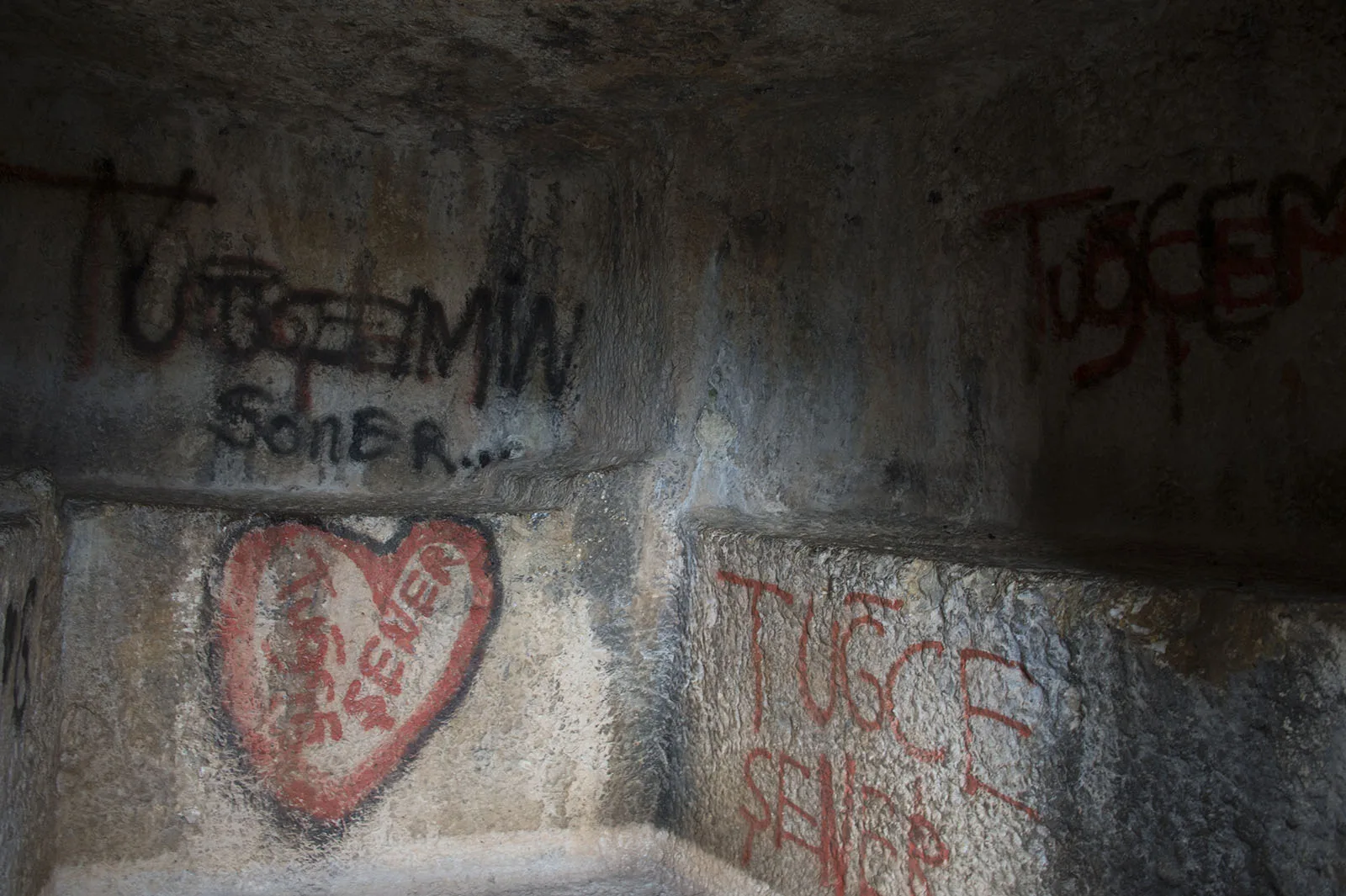
The tomb is carved into the rock face above the town and dates from around the 4th century BC. Its facade has an Ionic-style columned porch. Inside, there is a simple chamber with benches for the dead. An inscription in Greek names the owner as Amyntas, son of Hermagios, although we know little else about him. The weathering of the stone, the angle of the cliff and the way the monument faces the town make it very atmospheric.
Next to it are smaller tombs, some of them unfinished, and from the platform in front you get one of the best panoramic views of Fethiye, the harbour and the islands of the bay. Late afternoon, when the sun is on the facade, is the best time for photographs.
How to get up there
A stepped path begins in the old part of town near the Paspatur area and climbs the cliff. It is a long flight of steps of varying height. It is not long, but in July and August the heat on the stone can be intense, so go early or late. Wear shoes with grip, because the steps can be uneven and polished by thousands of feet. There is a ticket office near the entrance; the price and opening hours can change, so check the current information locally.
Other tombs in and around Fethiye
- Lycian sarcophagi: Several free-standing stone sarcophagi with pointed Gothic-looking lids stand in the middle of town, near the municipality area. You can see them without a ticket, and they are a good photo stop.
- Tombs near Kayaköy and Ölüdeniz: You will spot more carved tombs in cliffs and hillsides across the wider area.
- Telmessos Theatre: The remains of the Hellenistic and Roman theatre are close to the waterfront. Excavations have restored part of the seating, and it is worth a short visit.
- Fethiye Museum: Displays finds from Telmessos and the surrounding region, and the region’s archaeology more broadly. Check opening times locally and what is on display.
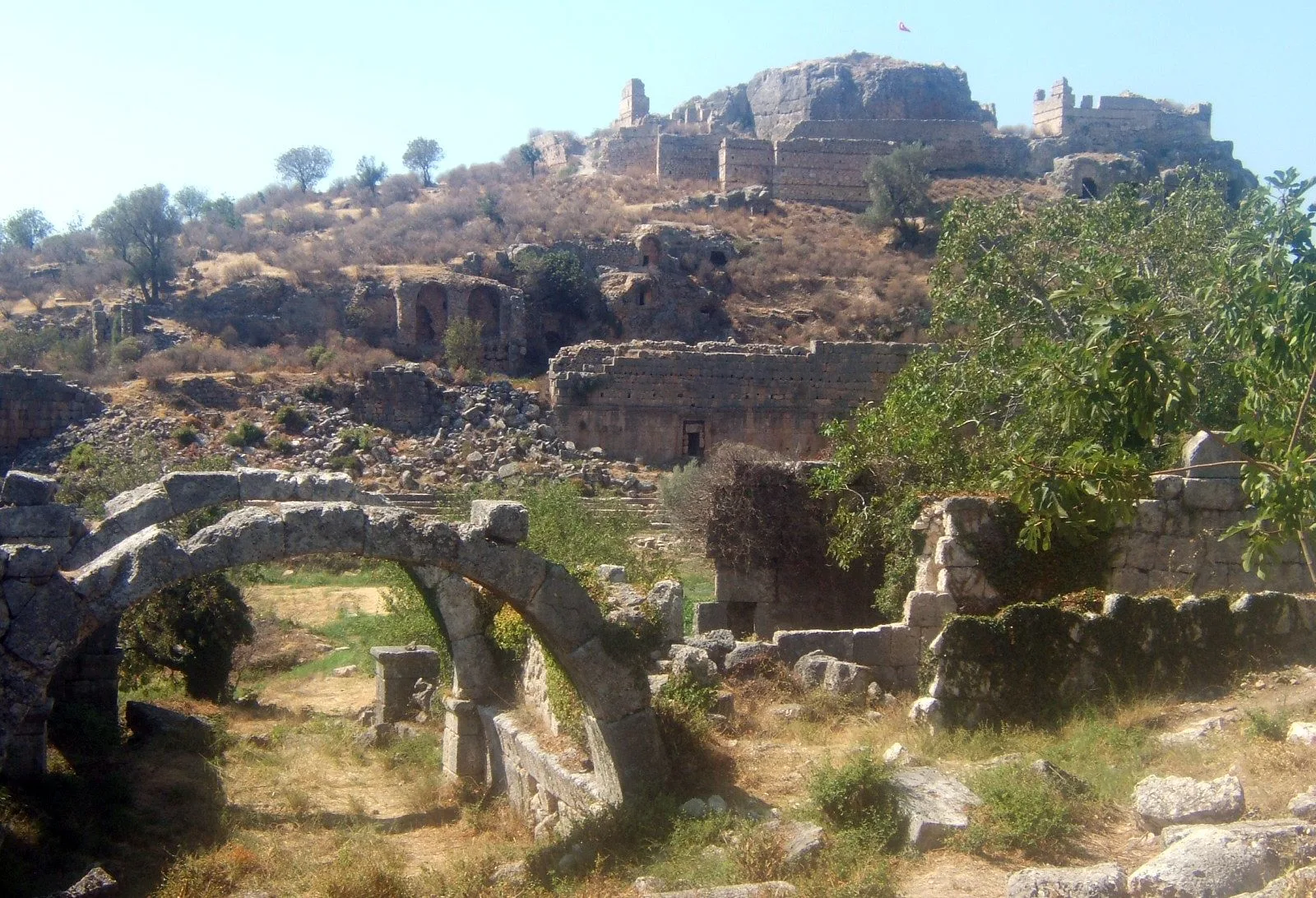
If you want to see Lycian architecture on a larger scale, the sites of Tlos, Pinara, Xanthos and the Letoon are within easy day-trip distance of Fethiye. Tlos in particular has a dramatic acropolis, a theatre and rock tombs set above a green valley.
How long to allow
Allow about an hour: 10 to 15 minutes to climb, a good half hour at the top and a few minutes down. If you add the sarcophagi and the theatre, make it a relaxed two-hour town walk.
Practical notes
- There is little shade on the site, so bring water and a hat in summer.
- The platform has steep drops, and children need supervision.
- Do not climb on the tombs or touch the carved surfaces, as the stone is fragile.
- The tomb is also easy to appreciate from the waterfront, even if you do not go up.
Frequently asked questions
What is the Tomb of Amyntas?
It is a Lycian rock-cut tomb from around the 4th century BC, carved into the cliff above Fethiye. Its facade imitates a temple with Ionic columns.
How do I get to the Tomb of Amyntas?
A stepped path starts near the old Paspatur area of town and climbs to the tomb. It takes roughly 10 to 15 minutes on foot.
Is there an entrance fee?
There is a ticket office near the entrance. Fees and opening hours can change, so check locally.
What is the best time to visit?
Late afternoon is best for light and cooler temperatures. In summer avoid midday.
Where can I see more Lycian sites?
Tlos, Pinara, Xanthos and the Letoon are all within a day trip of Fethiye.