Kayaköy Ghost Village Guide: History, What to See and When to Visit
Hundreds of roofless stone houses on a hillside, left empty a century ago. Kayaköy is Fethiye's most haunting and most moving historic site.
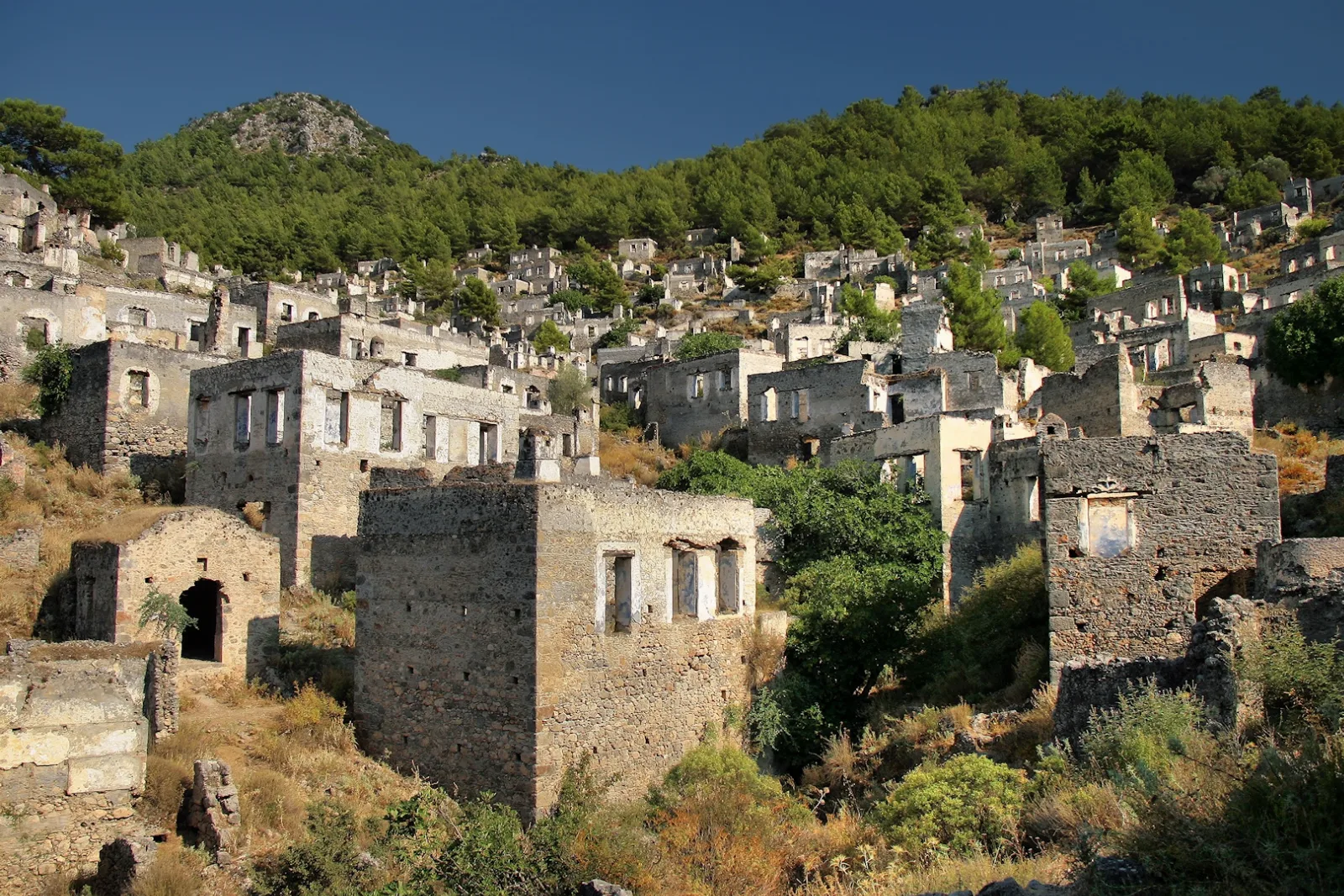
On a hillside about 8 km from Fethiye, hundreds of stone houses stand without roofs, windows or doors. Olive trees grow where living rooms used to be. This is Kayaköy, once the Greek-speaking village of Levissi (Karmylassos in its ancient form), and it is one of the most affecting places you can visit in southwest Turkey. It is quiet, atmospheric and surprisingly large, and it makes a good half-day outing from Fethiye.
A short history
For centuries a mostly Greek Orthodox community lived here beside Turkish neighbours, farming the valley and trading with the coast. In the early 1920s, after the war between Greece and Turkey, the two governments agreed a compulsory population exchange based on religion. Orthodox Christians in Turkey were sent to Greece, and Muslims in Greece were sent to Turkey. The villagers of Levissi left in 1923 and 1924. Many of the families who were resettled in Greece founded a new village near Athens, called Nea Levissi.
The incoming Muslim families did not settle in large numbers, and the empty village decayed. Earthquakes, notably in 1957, caused further damage. Today the site is protected and open to visitors as an open-air museum. The history is a sad one, and many Turkish and Greek visitors come here for exactly that reason. It is worth reading about it before you arrive.
What to see
- The streets and houses: More than 500 buildings survive in various states. The paved paths between them climb the hillside, and you can look into rooms and see old fireplaces, niches and stairways.
- The Upper Church (Panagia Pyrgiotissa): Higher up the slope, with fragments of painted decoration still visible. The climb is rewarded with a wide view over the valley.
- The Lower Church (Katapanagia): A larger church at the lower end of the village, with remains of wall paintings and decorative floors.
- The wider valley: From the top you can see terraces, orchards and the hills that run towards Ölüdeniz and the sea.
Look for the details: carved doorways, grape presses, cisterns and lintel stones with dates. They remind you that people lived normal lives here.
Getting there
Kayaköy lies roughly 8 km from Fethiye town centre. Minibuses (dolmuş) run from the Fethiye bus station, with fewer services in the cooler months. A taxi is an easy option for a short trip, and you can ask the driver to wait. Ask for the price before you set off. You can also cycle, though the final climb is steady. By car, there is parking close to the entrance. Fares and times change, so check them locally.
Tickets, hours and time needed
The site has an entrance fee collected at the gate. Prices and opening hours change, and the site is typically open daily during daylight hours, but check the current information locally. Plan on about 1.5 to 2 hours if you want to walk up to the churches, and more if you like to photograph or read the information boards.
What to bring and wear
- Sturdy shoes with a good grip, since the paths are uneven and the stones can be slippery.
- A hat, sunscreen and at least a litre of water per person in warmer months.
- Modest clothing is a respectful choice, because the churches are sacred places to many people.
- Stay on the paths and do not climb on fragile walls or remove any stones.
Where to eat nearby
Several small restaurants and cafés sit just outside the entrance and in the lower village. Expect simple Turkish food such as gözleme, grilled meat, salads and fresh juices. Check the menu for current prices. A cold ayran or a pomegranate juice makes a good reward after the climb. A few houses in the valley have also been converted into guesthouses, galleries and handicraft shops.
Combining Kayaköy with other places
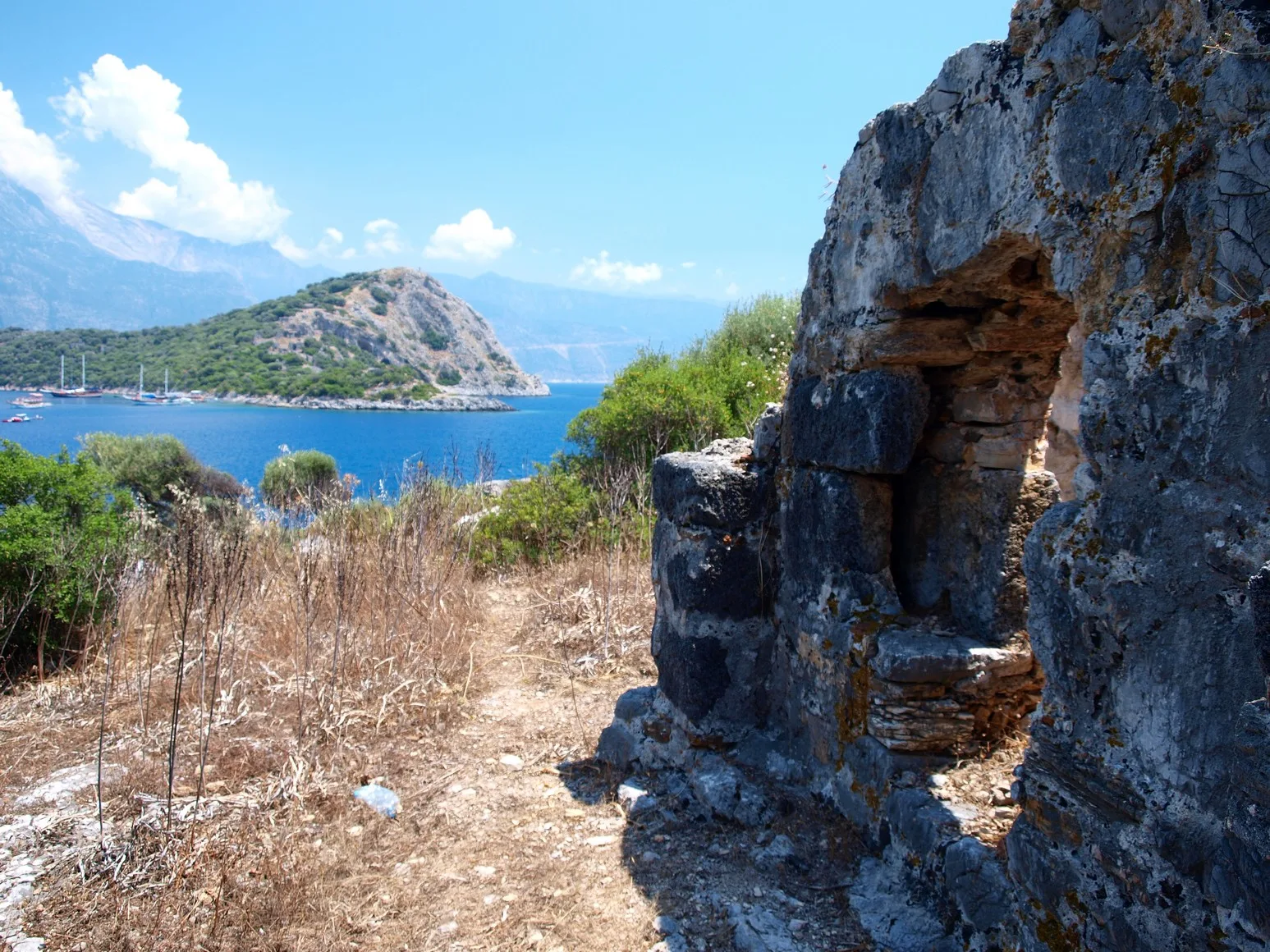
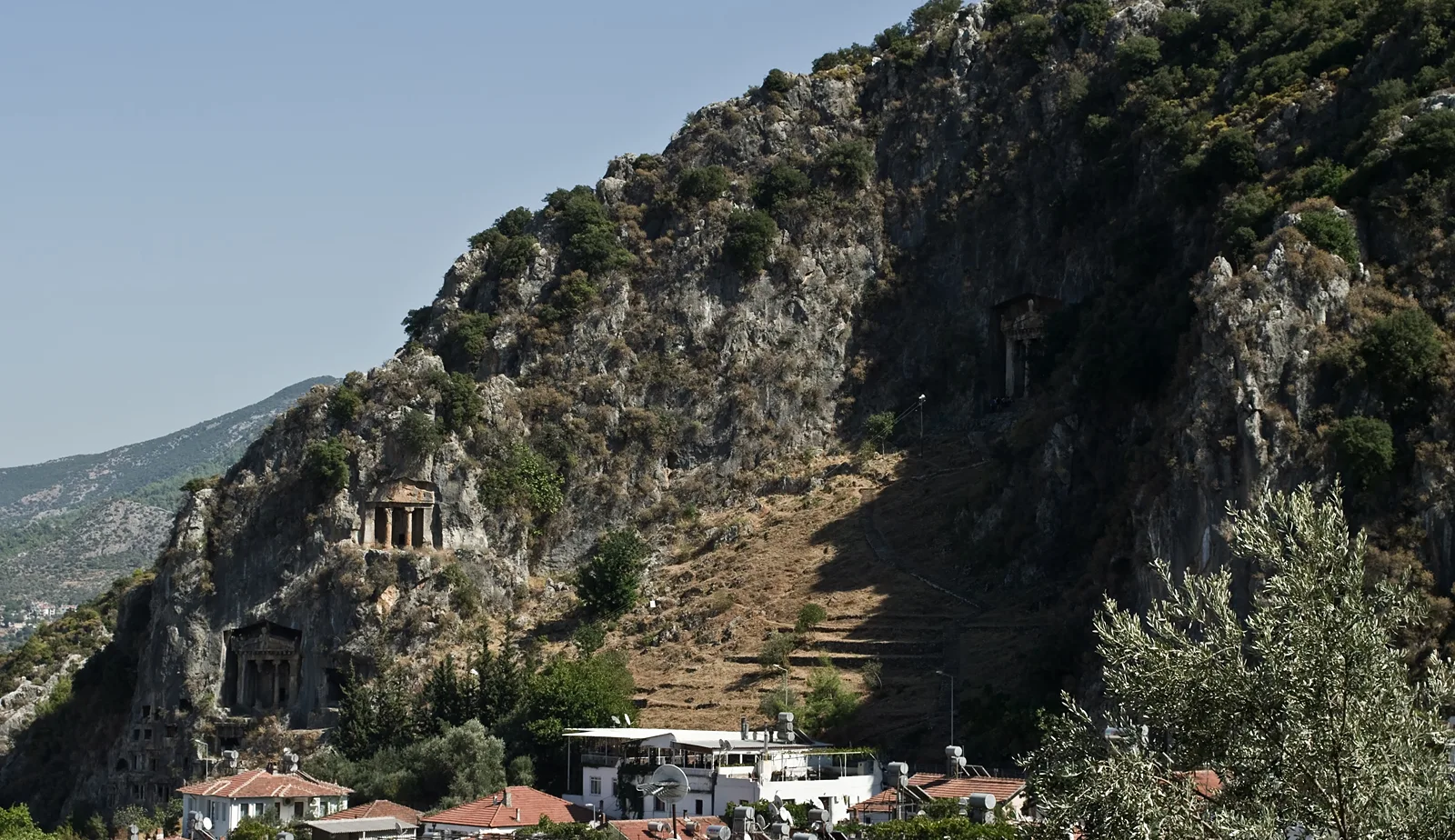
Kayaköy fits well with a day that includes the Ölüdeniz side of the coast. You can also reach the quiet beaches of Kıdrak and Gemiler Bay by road from this area. If you are interested in history, pair it with the Tomb of Amyntas above Fethiye town, which tells a story from two thousand years earlier.
A note on respect
The village is not a film set. It is a real place with real family history, and many descendants of the former residents visit. Keep voices low in the churches, avoid posing in ways that trivialise the site, and leave everything as you found it.
Frequently asked questions
What is Kayaköy?
Kayaköy is an abandoned village near Fethiye that was home to a Greek Orthodox community until the population exchange of 1923 to 1924. Its stone houses and churches are now protected as an open-air museum.
How far is Kayaköy from Fethiye?
It is roughly 8 km from the town centre. You can go by dolmuş, taxi, bicycle or car.
How long should I spend at Kayaköy?
About 1.5 to 2 hours is enough for most visitors. Allow more time if you want to climb to the churches and take photographs.
Is there an entrance fee?
Yes, there is a ticket at the entrance. Prices and hours change, so check locally on the day.
When is the best time to visit?
Early morning or late afternoon, and outside the hottest months, because the site has little shade.